On the International Day of Persons with Disabilities: "We Push" Screening Sparks Dialogue on Inclusive Road Safety
December 03, 2025
Road Safety
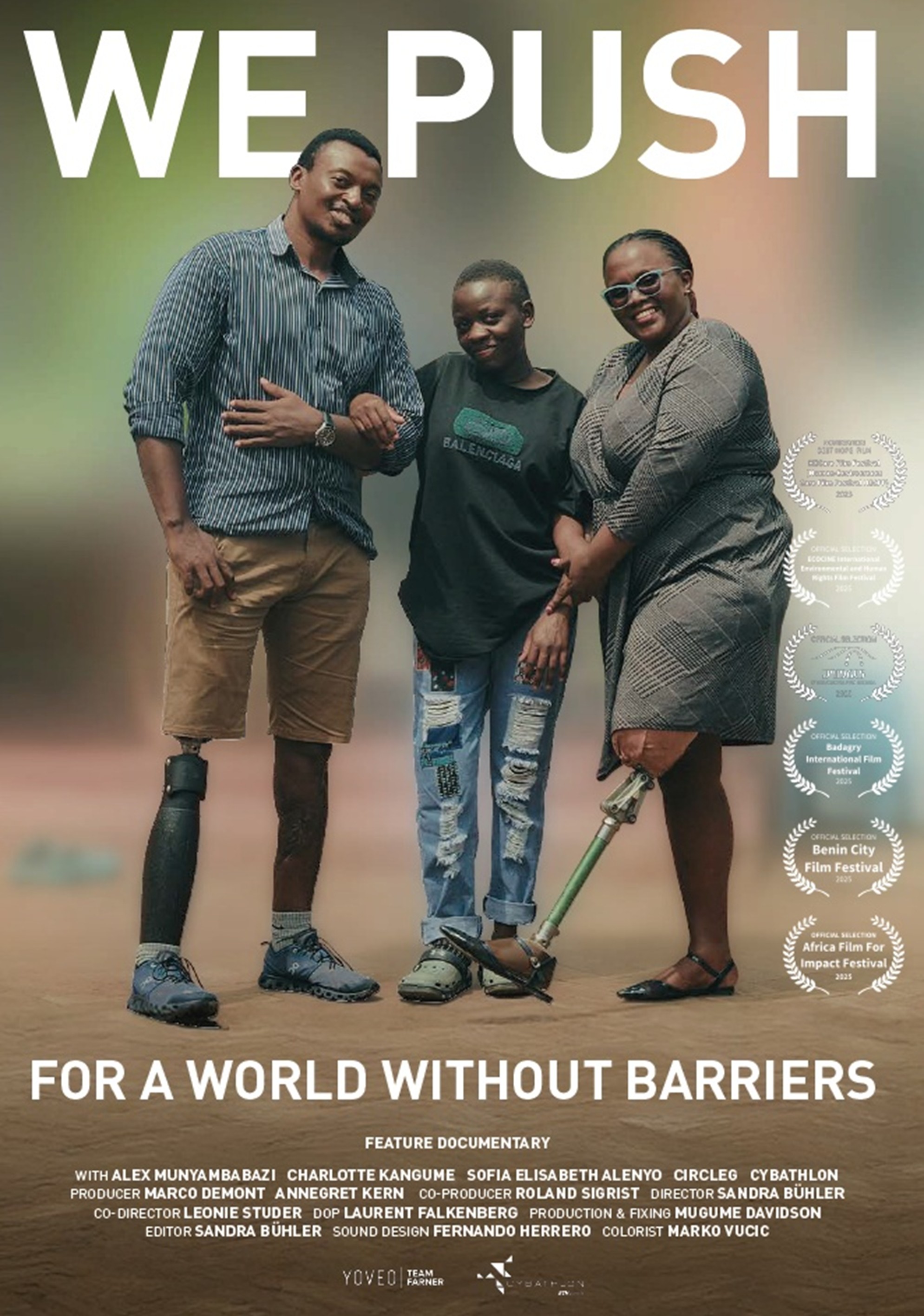
On December 3, 2025, the African Association of Road Safety Lead Agencies (AARSLA) and the Africa Transport Policy Program (SSATP) commemorated the International Day of Persons with Disabilities with a private screening of the documentary We Push – for a world without barriers, followed by a focused discussion on advancing disability-inclusive transport and road safety across Africa.
The event brought together road safety leaders, practitioners, and advocates to reflect on how design, technology, and policy can work hand-in-hand to restore mobility, dignity, and opportunity for persons with disabilities —while preventing injuries and their outcomes.
A Story of Survival, Advocacy, and Innovation
We Push traces the inspiring journey of Charlotte Kangume, a road traffic crash survivor who transforms personal tragedy into powerful advocacy for disability rights and safer, more inclusive transport systems. Her story is closely intertwined with the work of the Amputee Self-Help Network Uganda (ASNU), an organization founded by amputees for amputees to support survivors navigating life after injury. Through ASNU, survivors receive peer support, practical guidance, and a pathway forward at a moment when formal post-crash systems often fall short. The film also spotlights innovation from Circleg, a Swiss-Kenyan company developing more affordable prosthetic limbs, demonstrating how science, design, and cross-border collaboration can expand access to assistive technologies in low-resource settings.
Together, these narratives expose a broader systemic reality: for most road traffic crash survivors, the real struggle begins after the injury itself. Stigma, isolation, and limited access to rehabilitation often shape the course of their lives long after the crash. Through advocacy grounded in lived experience and practical, locally adapted solutions, the central message of We Push is clear: restoring mobility is fundamentally about restoring human rights and dignity.
Inclusion by Design, Not by Exception
The program opened with welcome remarks from Marisela Ponce de Leon, SSATP’s Road Safety Pillar Lead, who underscored SSATP’s commitment to making Africa’s transport systems safer and accessible by design. She emphasized that disability inclusion must be embedded upstream—within planning, Universal Design (UD)infrastructure standards, and comprehensive road safety strategies—rather than treated as an afterthought. Film director Sandra Buehler then shared insights into the making of the documentary, describing its intention to bring marginalized voices to the forefront and reshape narratives around disability. Laura Magni from Circleg followed with reflections about the organization’s mission to lower costs and raise quality in prosthetic care.
Post-Crash Reality and the Limits of Current Systems
Building on the film’s narrative, Kangume shared her lived experience as a crash survivor and highlighted the barriers many survivors continue to face long after the initial injury—from the high cost of prosthetic devices to the daily realities of navigating inaccessible streets, services, and public transport. Drawing on her work with fellow survivors, she emphasized how peer-led support, practical guidance, and community solidarity can help fill critical gaps where formal post-crash systems remain limited. Her intervention reinforced a recurring theme throughout the discussion: post-crash care, rehabilitation and long-term inclusion remain among the weakest links in road safety systems.
From Experience to Policy: The Role of Road Safety Institutions
Against this backdrop, the discussion turned to the role of road safety institutions in translating these realities into policy and practice. From the leadership of the African Association of Road Safety Lead Agencies (AARSLA), Andrew Kiplagart (Kenya), President of AARSLA, stressed the need to embed inclusion into national road safety strategies and lead agency mandates. He was joined by Lateef Ramoni (Nigeria) of the AARSLA Secretariat and Amon Mweemba, AARSLA Vice-President (Zambia), who raised questions and highlighted practical steps for lead agencies, cities, and operators to integrate universal design principles and ensure the meaningful participation of persons with disabilities across the policy-to-implementation chain.
From Global Commitment to Operational Action
Closing reflections by World Bank Country Director, Marie-Chantal Uwanyiligira, emphasized that inclusion is foundational—not optional. She underscored that accessibility must be built in from the start to avoid costly retrofits and structural exclusion. She also highlighted the World Bank’s Disability Inclusion and Accountability Framework, alongside the Environmental and Social Framework, as practical anchors for mainstreaming disability considerations across operations. The discussion also reinforced a “twin-track” approach: systematically integrating disability into all transport and urban projects, while also pursuing targeted interventions where gaps persist.
Five clear calls to action emerged from this gathering:
- Design for all by default: Embed universal design principles in transport, urban, and infrastructure planning and standards.
- Co-create with persons with disabilities: Engage organizations of persons with disabilities (OPDs) throughout policy, design, and delivery.
- Invest in disability-disaggregated data: Improve measurement to inform evidence-based decisions and accountability.
- Institutionalize accessibility: Align building codes, transport regulations, and city systems with accessibility requirements.
- Build capacity across teams: Equip agencies and project teams to operationalize inclusion frameworks effectively.
Moving Forward: Turning Dialogue into Delivery
By centering lived experience, showcasing practical innovation, and aligning commitments across institutions, the event helped catalyze momentum toward an Africa where streets, services, and systems work for everyone.
SSATP and AARSLA extend their appreciation to all participants and invite partners to carry these commitments into upcoming programs and operations—advancing inclusive road safety, expanding access to assistive technologies, and pushing together for a world without barriers.