Guidelines for a Policy Framework to Enhance the Safety of Commercial Motorcyclists in African Countries
SSATP Working Paper
January 28, 2026
Road Safety
Road Safety
Motorcycle
Angola
Benin
Cameroon
Ethiopia
Kenya
Mozambique
Rwanda
Uganda
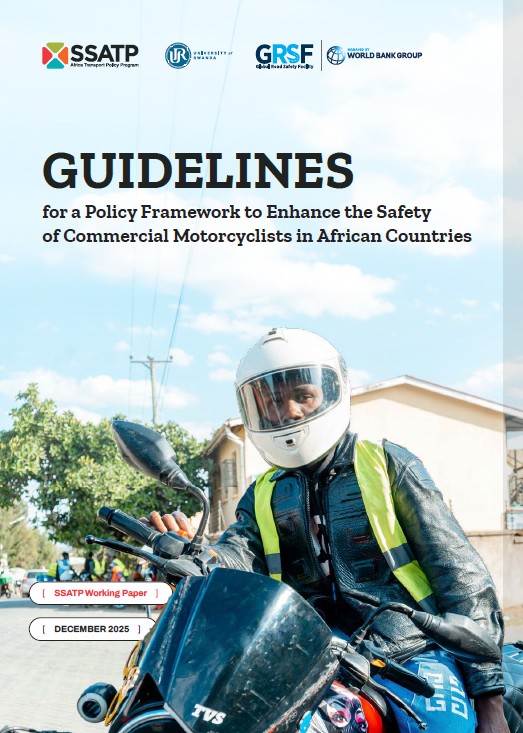
Commercial motorcycles play a vital role in mobility and employment across Africa, yet they account for a disproportionate share of road traffic fatalities—often between 30 and 60 percent of all road deaths. This SSATP working paper presents a practical, evidence-based policy framework to help governments transform commercial motorcycling from a high-risk, largely informal sector into a safer, more professional, and better-regulated component of national transport systems
Drawing on regulatory reviews and stakeholder consultations in eight African countries—Angola, Benin, Cameroon, Ethiopia, Kenya, Mozambique, Rwanda, and Uganda—the guidelines identify common institutional, regulatory, and data gaps that undermine motorcycle safety. The report proposes a phased framework organized around five mutually reinforcing pillars: strengthening helmet standards and compliance; formalizing licensing, training, and registration; expanding insurance and social protection; improving crash data and digital enforcement systems; and enhancing institutional coordination and sustainable financing.
Designed to support country-owned reform, the guidelines align with the Safe System approach and continental road safety priorities, offering actionable recommendations, implementation pathways, and monitoring tools. Together, they provide governments and partners with a clear roadmap to significantly reduce motorcycle-related deaths and injuries while safeguarding livelihoods and access to essential mobility.