Charting a Digital Course for Maritime Trade Facilitation: IMO, SSATP and the World Bank Accelerate Action Across Eastern and Southern Africa
Dar es Salaam
Tanzania
April 20, 2026
Regional Integration
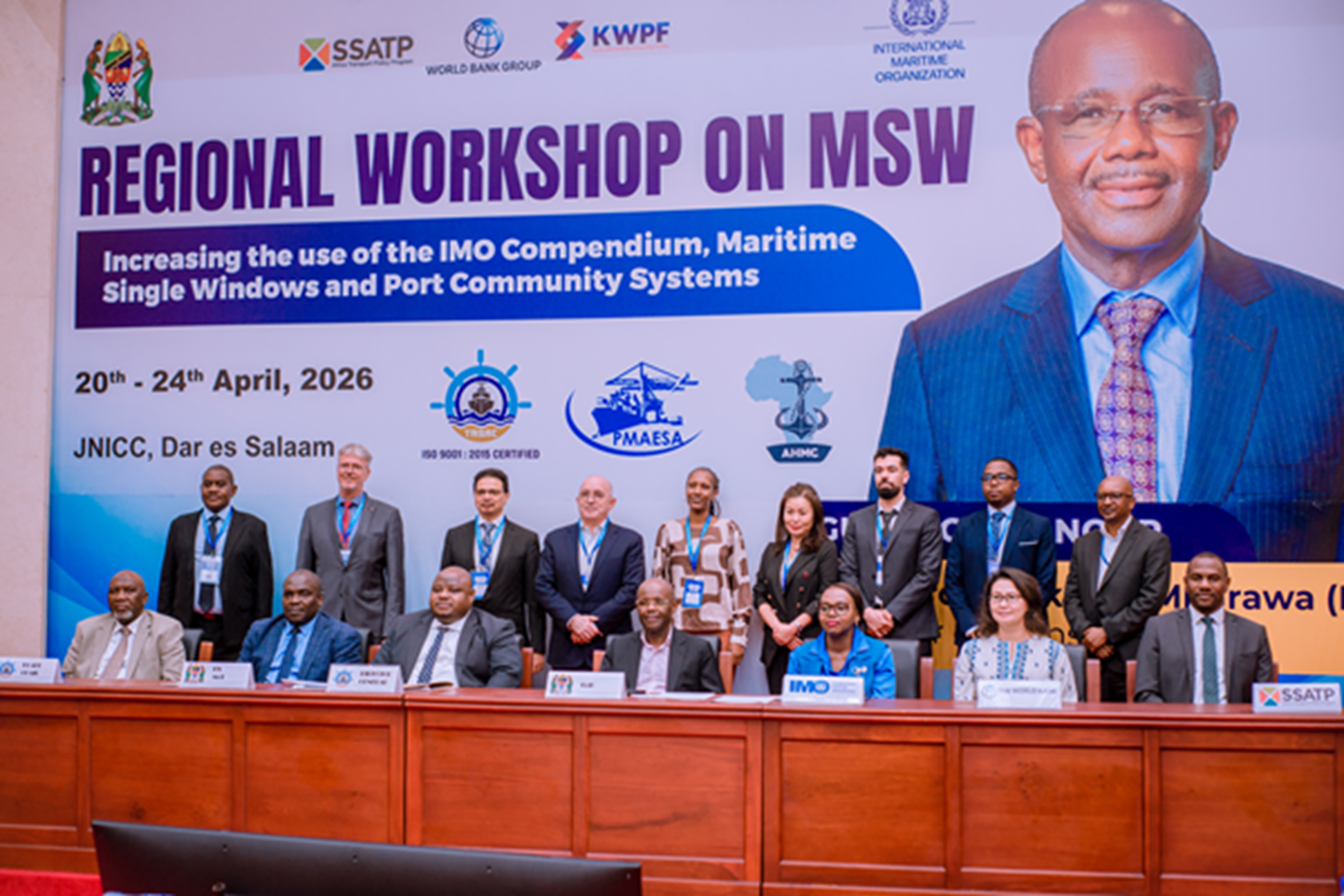
DAR ES SALAAM, April 20, 2026 —The International Maritime Organization (IMO), the Africa Transport Policy Program (SSATP), and the World Bank, in partnership with the United Republic of Tanzania’s Ministry of Transport, today opened a landmark regional workshop in Dar es Salaam aimed at accelerating the digitalization of ports across 12 African countries. The workshop was opened by Tanzania's Minister of Transport, H.E. Prof. Makame Mbarawa (MP). Running through April 24, the five-day event is focused on expanding the adoption of the IMO Compendium and scaling up the implementation of Maritime Single Windows (MSW) and Port Community Systems (PCS), integrated digital platforms that streamline vessel and cargo clearance, reduce bureaucratic delays, and strengthen Africa's competitiveness in global maritime trade. The workshop convenes a broad coalition of regional and international institutions committed to translating policy into action, including the Port Management Association of Eastern & Southern Africa (PMAESA), the African Development Bank (AfDB), the African Harbour Masters' Committee (AHMC), the African Alliance for Electronic Commerce (AAEC).
Bringing together 108 participants, including 36 women from maritime administrations, port authorities, and customs authorities from Angola, Djibouti, Ethiopia, Kenya, Malawi, Mauritius, Mozambique, Namibia, Seychelles, Somalia, South Africa, and the United Republic of Tanzania, the workshop is structured around both knowledge-sharing and practical capacity building. Sessions will raise awareness of the strategic benefits of MSW implementation and strengthen participants' understanding of the alignment required with the IMO Compendium on Facilitation and Electronic Business. To support this objective, the program highlights lessons learned and good practices drawn from IMO needs assessment missions conducted across the region—including functional analyses of existing ship and cargo clearance systems that identified key challenges and targeted recommendations for effective MSW deployment. Building on these findings, all participating African member states will present their current port systems, enabling peer learning on progress, challenges, and opportunities.
The workshop will also provide participants with deeper insight into the scope and functions of Port Community Systems, and explore potential synergies with Maritime Single Windows to further enhance port efficiency and trade facilitation. These synergies underscore a central premise of the workshop: MSW systems are not standalone digital solutions, but core elements of a broader, regionally harmonized trade facilitation ecosystem. By deepening participants’ understanding of the FAL Convention, strengthening coordination among port stakeholders, and clarifying the financing and policy requirements for MSW implementation, the workshop aims to equip countries with the practical knowledge needed to accelerate MSW deployment. The workshop also draws on the previous IAPH-World Bank Study, Port Community Systems: Lessons from Global Experience.
Anchoring the Workshop Within SSATP's Strategic Agenda
The Dar es Salaam workshop is the second in a growing series of regional editions, building on a first workshop held in Abidjan in December 2025 that brought together 79 participants from 12 French-speaking African countries—reflecting the expanding scale and momentum of this continental effort to advance maritime digitalization. This momentum is of strategic importance for SSATP, an international partnership hosted by the World Bank, as it contributes directly to one of the major objectives of its Fourth Development Plan (DP4): supporting the digitalization of transport and trade corridors across the continent.
The establishment of MSW systems is widely recognized as a critical lever for reducing logistics costs, facilitating trade, and strengthening the competitiveness of African ports—a recognition echoed in the recent SSATP Mid-Term Review, which identified MSW development as a good practice that reinforces the implementation of transport facilitation policies across Africa. SSATP’s engagement in this workshop supports the alignment and harmonization of MSW initiatives among participating countries, helping to prevent fragmentation while contributing to the technical rigor, regional coordination, and long-term sustainability that effective MSW implementation demands. To reinforce these objectives, SSATP will deliver a dedicated session focusing on areas where the program can provide targeted assistance and sustained support.
Strengthening Regional Collaboration
The workshop draws on a wide network of regional expertise. The participation of regional port associations, including PMAESA and AHMC, alongside the African Alliance for Electronic Commerce (AAEC), and representatives from key development institutions, such as the African Development Bank (AfDB) will add valuable perspectives to the discussions.
The workshop is delivered through IMO’s Integrated Technical Cooperation Programme (ITCP) with the kind financial support of the People's Republic of China, and in close collaboration with the World Bank, with resources from the Korea World Bank Partnership(KWPF) Facility and the Ministry of Transport of the United Republic of Tanzania. It builds on SSATP’s recent analytical work, Catching Up on Digital Port Infrastructure for Africa, which underscores that MSW implementation requires not only digital tools but also robust legal frameworks, strong institutional leadership, and coordinated stakeholder engagement.