From Design to Maintenance: Building Safer Roads for Africa's Cyclists and Pedestrians
July 07, 2026
Road Safety
Policy Recommendations
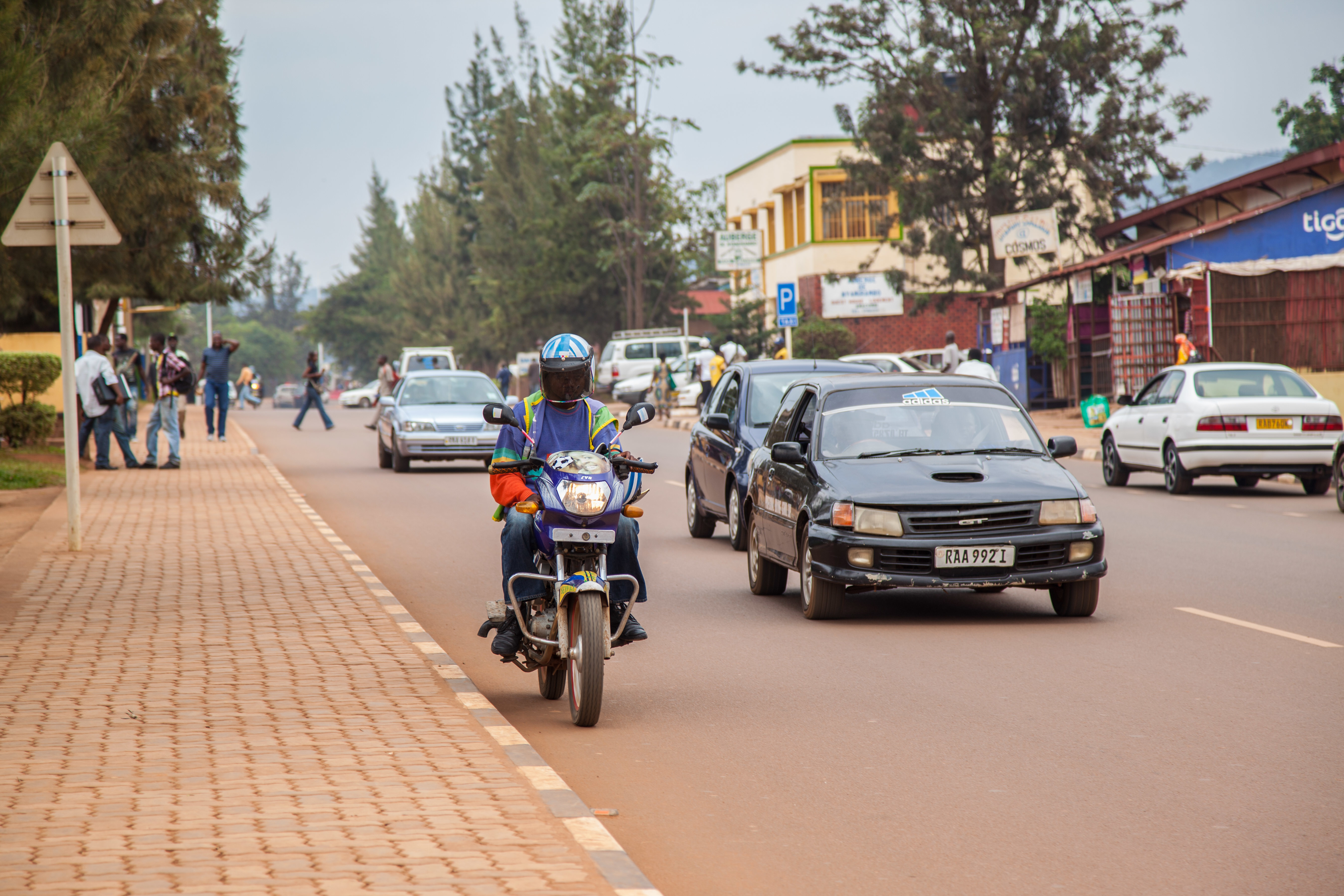
Across Africa, walking and cycling are not lifestyle choices. They are daily necessities for millions of commuters, schoolchildren, vendors, and caregivers who depend on road infrastructure that was rarely designed with them in mind. The consequences are stark: pedestrians and cyclists account for nearly half of all road traffic fatalities on the continent, on networks historically built for motor vehicles rather than people.
On June 3, 2026, World Bicycle Day, the African Association of Road Safety Lead Agencies (AARSLA) and the Africa Transport Policy Program (SSATP) brought together 231 participants for a high-level webinar: "Safe Infrastructure for Active Mobility in Africa: Protecting Cyclists and Pedestrians." The session drew road safety authorities, urban planners, local government representatives, development partners, civil society organizations, and active mobility advocates from across Africa and the international development community. The discussions produced a unifying message: protecting vulnerable road users must be built into every stage of the infrastructure lifecycle, from planning and design through construction, operation, data-based monitoring, and long-term maintenance.
Safety Starts at the Design Stage
The first and most fundamental shift, participants agreed, is in how infrastructure is conceived. Eng. Christine A. Ogut of Kenya's National Transport and Safety Authority drew a critical distinction between "compliant design" and "safe design." Roads can meet technical standards and still fail the people who use them. Safe design anticipates human error rather than punishing it, incorporating raised crossings, protected cycling lanes, continuous footpaths, refuge islands, and traffic calming measures, particularly in high-activity zones near schools, markets, and bus stops where the risk to pedestrians and cyclists is highest.
Abraham Amaliba of Ghana's National Road Safety Authority extended this argument to the urban planning level. Walking and cycling must be treated as core components of mobility systems, connected to public transport, employment hubs, schools, and healthcare facilities from the moment a city begins to plan, not after roads are already built.
A Continental Roadmap
The Pan African Action Plan for Active Mobility (PAAPAM), presented by Constant Cap of the United Nations Environment Programme (UNEP), offers African countries a structured framework for embedding these principles at scale. Developed through consultations with more than 1,500 stakeholders across over twenty regional meetings before its launch at the World Urban Forum in 2024, PAAPAM is built around five principles: leaving no one behind, evidence-based practice, policy coherence, community engagement, and multi-sector partnerships. For countries looking to translate political commitment into infrastructure investment, it offers both a roadmap and a community of practice.
Affordable Solutions, Measurable Results
Ibrahim Auma Nyangoya, Nairobi City County Executive Member for Mobility and Works, demonstrated that transformative change does not require large budgets. Nairobi's pedestrianization initiatives, which include reclaiming road space, expanding walkways, adding cycling facilities, and improving lighting, have delivered measurable gains in public safety, business activity, and air quality. Low-cost, high-impact interventions, backed by community participation and political will, can make streets significantly safer for vulnerable road users, quickly and affordably.
Data as Infrastructure
Designing safe infrastructure is only possible when decision-makers know where the risks are. Ariel Sacramento of the Centre National de Sécurité Routière (CNSR) in Benin highlighted a critical gap: fewer than 30% of African countries have reliable road safety data systems, leaving pedestrians and cyclists statistically invisible even as they account for the majority of fatalities. His CDDE Model (Collect, Analyze, Decide, Evaluate) offers a structured approach to closing that gap, drawing on digitized accident records, geolocation tools, and interagency data sharing to direct investments where they are most needed.
Maintenance Is Not Optional
A road built safely can become dangerous through neglect. Oceane Keou of SSATP reframed road asset management as a direct safety issue: pedestrians and cyclists, who account for 38% of all road traffic fatalities in Africa, the highest share of any region globally, are exposed not only to poor design but to the slow deterioration of infrastructure meant to protect them. "A well-designed crossing fails the moment its paint fades, its lamp dies, or its drain blocks." That reframing is at the heart of SSATP's Resilient Road Asset Management (RRAM) framework, which calls for a shift from reactive repair to proactive, safety-led upkeep, treating markings, crossings, lighting, and drainage as safety-critical assets rather than afterthoughts.
Reaching the Most Vulnerable
Devin Connell of FIKA highlighted the mobility realities of rural communities, where large proportions of residents depend on footpaths, river crossings, and footbridges that fall entirely outside formal transport planning frameworks. Rural Networked Transport Infrastructure (RNTI) recognizes that when these often-invisible first-mile and last-mile connections fail, communities lose access to schools, markets, health services, and economic opportunity. Mapping, funding, and maintaining them is central to leaving no one behind.
Seven Takeaways: A Framework for Action
- Prioritize vulnerable road users in infrastructure design: Road projects should be designed around the needs of pedestrians and cyclists, with safety integrated from the outset, not as an afterthought.
- Integrate active mobility into urban development: Walking and cycling infrastructure must form a core component of urban planning, transport systems, and land-use policies, connected to public transport and essential services..
- Accelerate implementation of the PAAPAM framework: African countries should leverage continental cooperation, knowledge sharing, and technical assistance to advance active mobility initiatives at scale.
- Promote low-cost, high-impact infrastructure solutions: Affordable and scalable interventions can deliver significant improvements in safety, accessibility, and quality of life.
- Strengthen data-driven decision-making: Reliable data systems are essential for making pedestrians and cyclists visible in official statistics, identifying risks, prioritizing investments, and measuring impact.
- Embed climate resilience and maintenance into mobility systems: Sustainable transport requires both resilient infrastructure design and the ongoing upkeep of safety-critical assets.
- Improve rural and last-mile connectivity: Transport planning should address the full mobility network, including the informal pathways, river crossings, and rural access infrastructure that the most vulnerable communities depend on daily.
Moving Forward
For the millions of Africans who walk and cycle out of necessity every day, the difference between a safe road and a dangerous one can be the presence of a crossing, the brightness of a streetlight, or the condition of a footpath. The evidence is clear, the frameworks are in place, and the solutions are proven. Protecting them requires no new invention. What this webinar made clear is that the momentum is building too. Closing the infrastructure gap for vulnerable road users is not a distant ambition. With the right commitments made at every stage of the lifecycle, it is an achievable one.