Advancing maritime digitalization in West and Central Africa
Accra
Ghana
October 22, 2026
Regional Integration
Events
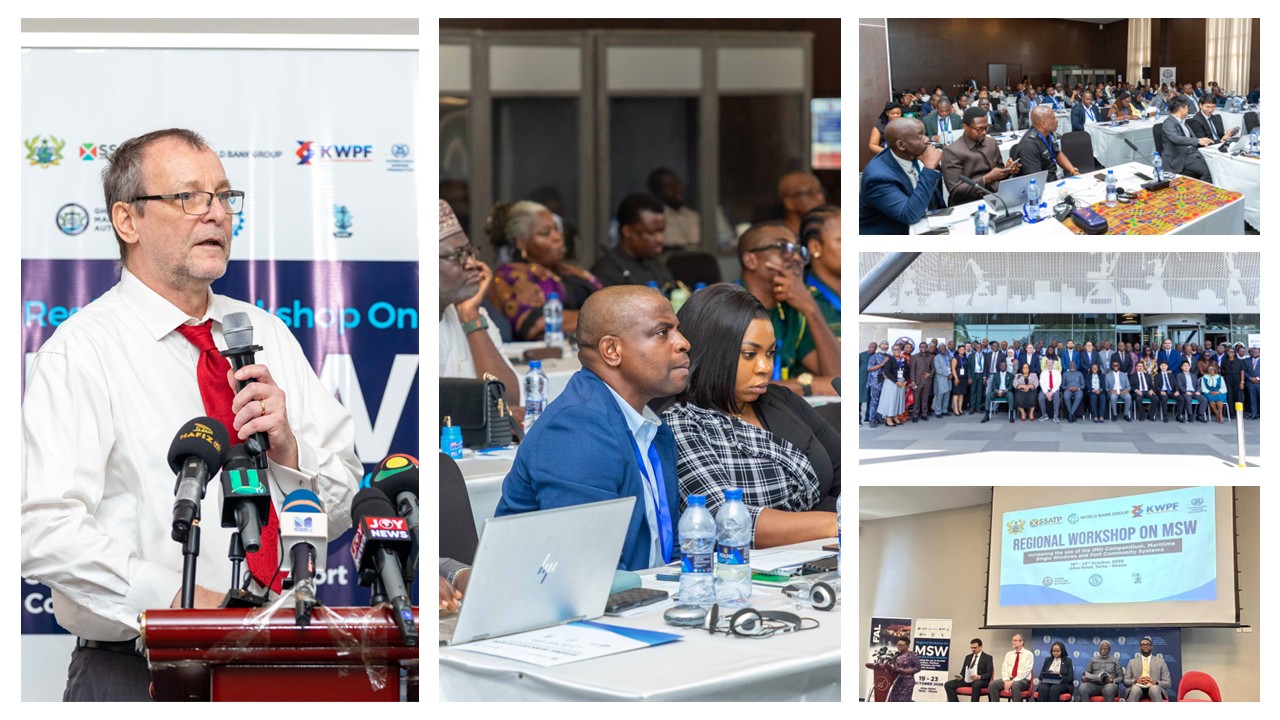
The International Maritime Organization (IMO), the Africa Transport Policy Program (SSATP), and the World Bank, in partnership with the Ghana Maritime Authority, convened a regional workshop in Accra from October 19 to 23, 2026, to accelerate the digitalization of ports across nine West and Central African countries.
Opened on October 19 by a representative of Ghana's Ministry of Transport, the five-day workshop aimed to:
- Promote the adoption of the IMO Compendium on Facilitation and Electronic Business, which sets out how shipping and port data are structured and shared electronically to streamline communication; and
- Scale up the implementation of Maritime Single Windows (MSWs) and Port Community Systems (PCSs), which are integrated digital platforms that streamline vessel and cargo clearance, reduce bureaucratic delays, and strengthen Africa's competitiveness in global maritime trade.
Promoting Regional Collaboration
The workshop convened a broad coalition of regional and international institutions committed to translating policy into action, including the Port Management Association of West and Central Africa (PMAWCA), the African Development Bank (AfDB), the African Harbour Masters' Committee (AHMC), and the African Alliance for Electronic Commerce (AAEC).
Bringing together 55 participants, including 15 women, from maritime administrations, port authorities, and customs authorities in Cabo Verde, Equatorial Guinea, The Gambia, Ghana, Guinea-Bissau, Liberia, Nigeria, São Tomé and Príncipe, and Sierra Leone, the workshop was structured around both knowledge sharing and practical capacity building.
Sessions highlighted the strategic benefits of MSW implementation and the need to align with the IMO Compendium on Facilitation and Electronic Business. The program shared lessons and good practices from regional IMO needs assessment missions, including analyses of ship and cargo clearance systems, key challenges, and recommendations for effective MSW deployment. Participating Member States also presented their port systems, fostering peer learning on progress, challenges, and opportunities.
Supporting a Regional Trade Facilitation Ecosystem
The workshop also explored potential synergies between PCSs and MSWs to further enhance port efficiency and trade facilitation. A central principle of the workshop was that MSWs are not standalone digital solutions but core elements of a broader, regionally harmonized trade facilitation ecosystem.
By deepening participants' understanding of the Convention on Facilitation of International Maritime Traffic (FAL Convention), strengthening coordination among port stakeholders, and clarifying the financing and policy requirements for MSW implementation, the workshop helped equip countries with the practical knowledge needed to accelerate MSW deployment. The workshop also drew on the previous International Association of Ports and Harbors (IAPH)–World Bank study, Port Community Systems: Lessons from Global Experience.
Aligning with SSATP's Strategic Priorities
This workshop was the third in a growing series of regional editions, building on a first workshop, held in Abidjan in December 2025, and a second, delivered in Dar es Salaam in April 2026. This progression reflects the expanding scale and momentum of the continental effort to advance maritime digitalization.
The initiative aligns with SSATP's Fourth Development Plan (DP4), which prioritizes digitalization of transport and trade corridors across Africa. MSWs are widely acknowledged as essential for reducing logistics costs, improving efficiency, and strengthening port competitiveness.
The workshop was delivered through IMO's Integrated Technical Cooperation Programme (ITCP) in close collaboration with the World Bank, with resources from the Korea–World Bank Partnership Facility (KWPF) and the Ministry of Transport of Ghana. It built on SSATP's recent analytical work, Catching Up on Digital Port Infrastructure for Africa, which highlights that effective MSW implementation depends not only on digital tools but also on a solid legal framework, strong institutional leadership, and coordinated stakeholder engagement.